

Billing & Recovery Engine: Accurate Utility Billing, Backed by a Team That Chases Every Dollar
Manual errors, outdated RUBS formulas, and missed charges quietly erode recovery every billing cycle. Billee's Billing & Recovery Engine automates the allocation and reconciliation, and a dedicated team catches what the software can't, targeting Billee's own 80–95% effective recovery benchmark.
See what your recovery rate could look like →Every billing cycle, reconciled automatically
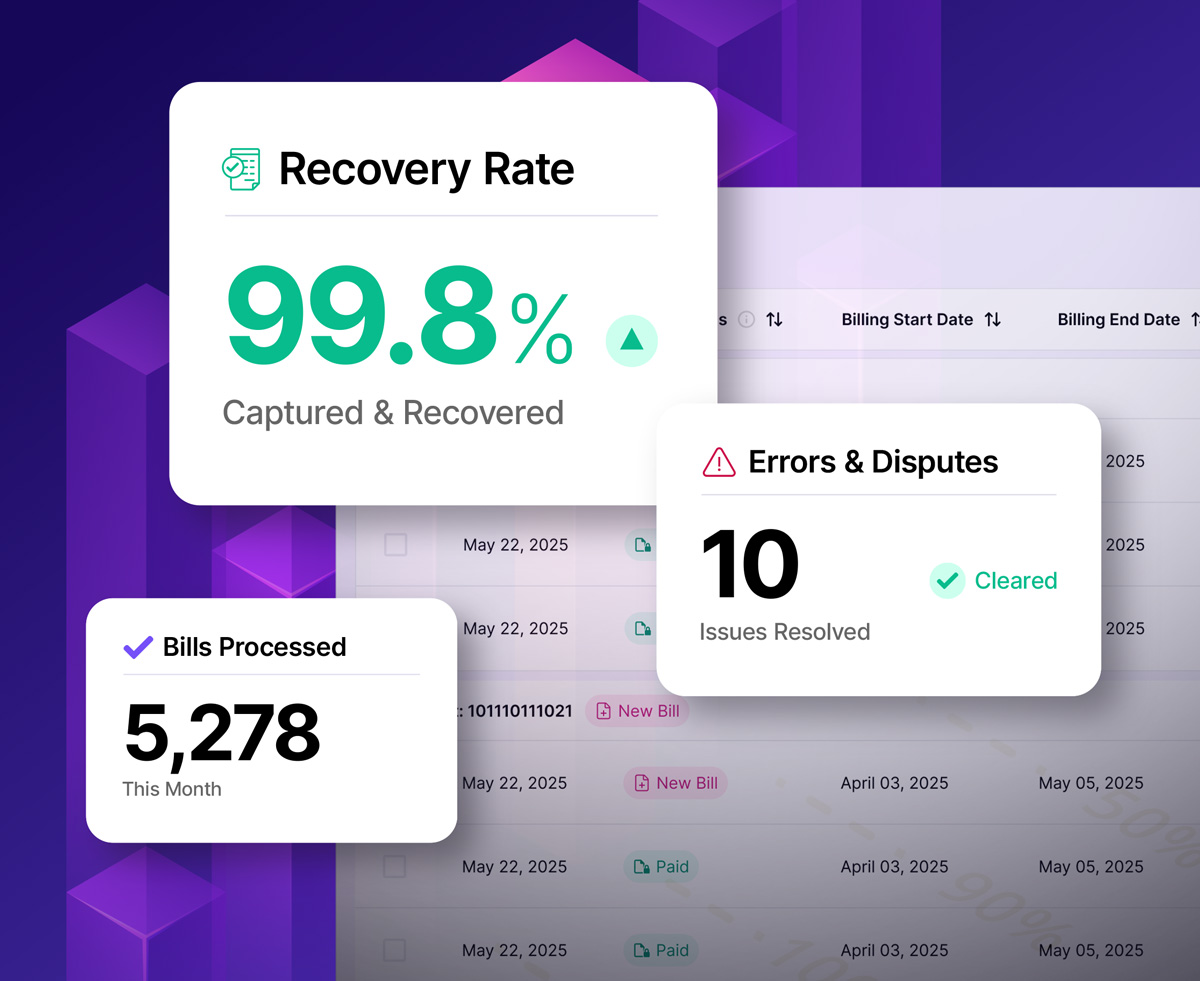
Billee's dashboard shows allocation, reconciliation status, and exceptions for every property in the portfolio, updated every billing cycle, so nothing posts until it's been checked.
Recoverable revenue is slipping through the cracks
Manual data-entry errors, RUBS formulas that were never updated for unit-mix changes, missed charges, inconsistent processes across properties. None of it shows up cleanly on one report, and the result is a recovery rate sitting well below what's achievable.
How the Billing & Recovery Engine works
Billee pulls vendor invoices and reconciles them against master meter usage for each property.
Charges are allocated with the right methodology (RUBS, submetering, or hybrid), and a preliminary billing report ("prelim") is generated.
Your team reviews the prelim, including "Biller Highlights" flagging exceptions the Billee team caught.
You approve, or request a regeneration, with a 1–2 business day turnaround either way.
Billee locks the report. Charges post to the PMS and resident ledgers, and e-bills go out.
The platform handles the volume. The account team handles the exceptions, the parts of billing that actually require judgment.
Everything the Billing & Recovery Engine covers
Portfolio-wide automation.
Accurate utility billing across every property, every cycle.
Reconciled charges.
Allocated and checked against master meter usage.
A team on exceptions.
Catching and correcting issues before bills post.
Two report formats.
A per-resident Detail Resident Report and a property-level Itemized Report.
Full activity log.
Every billing action documented for audit and compliance.
Billing & Recovery Engine at a glance
80–95% effective recovery is strong performance, per Billee's own benchmark. Below 80% signals a specific, addressable cause: vacant units, a hardware issue, or an allocation method that's drifted out of date.
Works With the Systems You Already Run
The Billing & Recovery Engine connects to Yardi Voyager, Yardi Breeze, RealPage, and Entrata through native integrations. Charges post directly, no manual re-entry.




Built for portfolios like yours
Owners and operators with 500+ units, the scale that justifies a dedicated billing team
Both RUBS-billed and submetered portfolios
Operators standardizing methodology across a portfolio with inconsistent history
Teams that want billing errors caught before they post, not after residents complain
Billing & Recovery Engine, Answered
Straight answers about how the Billing & Recovery Engine works, from the same account team that runs it for your portfolio.
What is Billee's Billing & Recovery Engine?
The Billing & Recovery Engine is Billee's core product for automated utility billing and recovery across a multifamily portfolio. It combines the Billee platform, which handles allocation and bill generation, with a dedicated account team that manages exceptions and audits.
What counts as a good recovery rate?
Billee's benchmark is 80–95% effective recovery, tracked on the customer dashboard every cycle. Recovery below 80% usually points to a specific cause, such as vacant units, a hardware issue, or an outdated allocation formula.
How does the monthly billing cycle work?
Billee generates a preliminary billing report each month, you review and approve it in the portal (with a 1–2 business day turnaround for any questions), and then charges post to your PMS and residents automatically once approved.
Does the Billing & Recovery Engine work with RUBS or only submetering?
It works with both, plus hybrid approaches. Billee applies the correct methodology property by property rather than forcing one approach across a mixed portfolio.
Who reviews the bills before they go out?
You do. Billee generates a preliminary report and flags exceptions through "Biller Highlights," but nothing posts to residents until you approve it in the portal.
How is this different from billing software I'd run myself?
Software-only tools leave exception handling, vendor issues, and audits to your team. Billee's account team does that work, using the same platform you have visibility into, so you get the automation without operating it yourself.
Ready to see it on your portfolio?
Billee handles allocation, billing, and recovery for multifamily operators who want the accuracy without operating the system themselves.
See what your recovery rate could look like →Get in touch
Utilities should be the easiest part of your operation