

Vacant Cost Recovery: Stop Utility Costs From Leaking Out of Empty Units
Vacant units keep racking up utility charges long after residents move out, quietly draining 3–7% of recoverable revenue from the typical portfolio. Billee's VCR engine catches it every cycle, and a named account manager recovers the cost instead of just flagging it.
See how VCR works for your portfolio →Every vacant unit, tracked automatically
Billee's dashboard shows occupancy, meter usage, and exception status for every vacant unit in the portfolio, updated every billing cycle, so nothing slips through unnoticed.
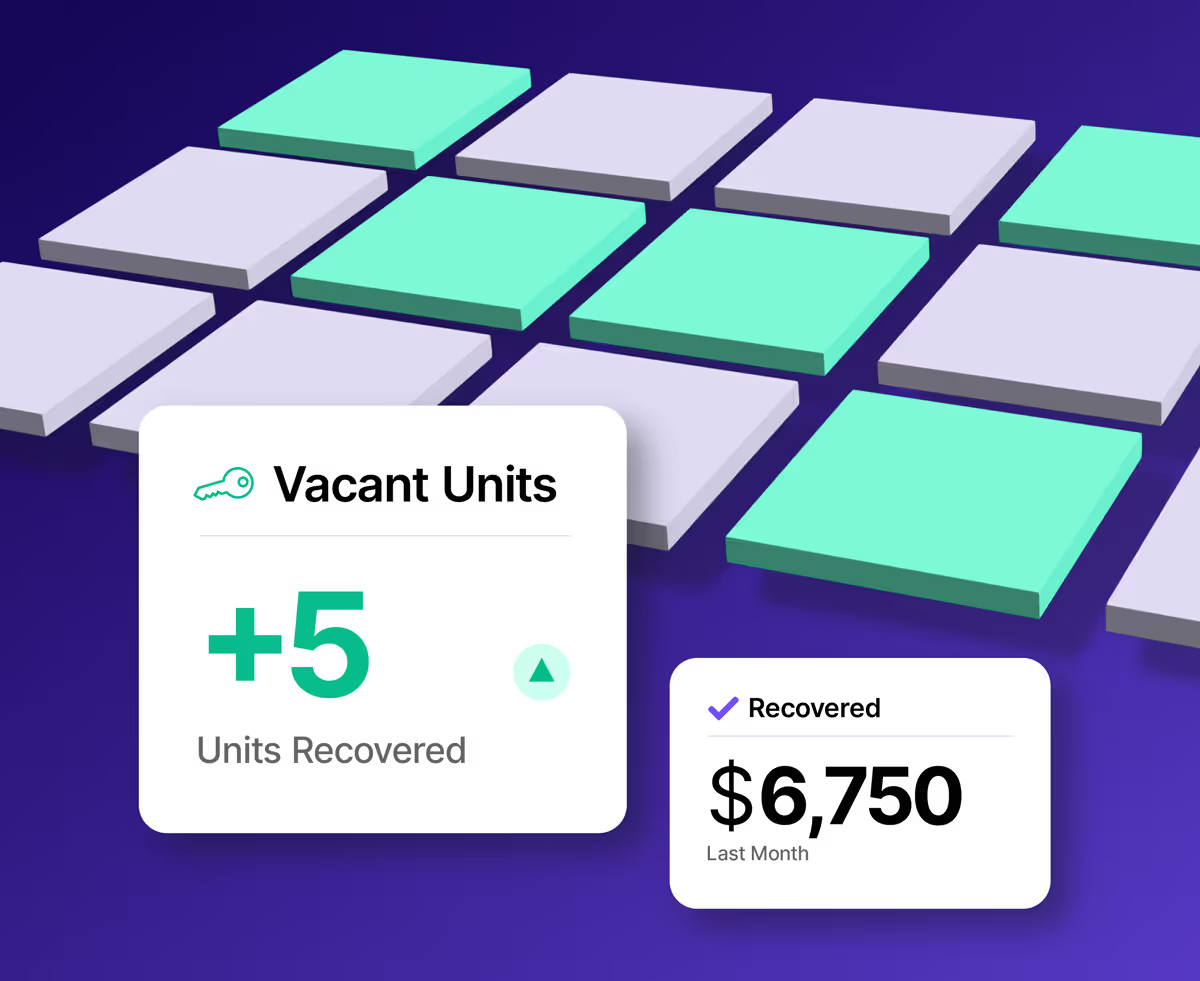
Vacant units are still costing you money
Missed move-out reads, master-meter usage nobody reallocates, hold-over residents, meters that fail quietly. None of it shows up as one obvious line item, and by the time the invoice arrives, the recovery window has mostly closed.
How Vacant Cost Recovery works
Billee pulls occupancy data from your PMS (Yardi, RealPage, or Entrata) every billing cycle.
The engine cross-references occupancy against actual meter usage for every vacant unit.
Usage above a configurable threshold generates an exception the same week.
Your named Billee account manager investigates, corrects the bill, and recovers the charge.
Recovered amounts show up in your monthly reporting, tied to the unit and the reason.
A person takes the action here, not just a dashboard alert. That's the difference between a flag and a fix.
Everything Vacant Cost Recovery covers
Continuous monitoring.
Occupancy, meter usage, and billing status tracked for every vacant unit, every cycle.
Named exception routing.
Every flag goes to a real account manager, not a notification queue.
Move-in/move-out handling.
Corrected billing for late or missed reads.
Threshold calibration.
Tuned by unit type and climate zone.
Zero resident disruption.
No added friction for residents or the on-site team.
Vacant Cost Recovery at a glance
Full optimization, thresholds calibrated by unit type and climate zone across the whole portfolio, typically takes 90–120 days. Recovery below Billee's 80–95% benchmark often traces back to unresolved vacant-unit leakage.
Works With the Systems You Already Run
Vacant Cost Recovery connects directly to your property management system. No rip-and-replace, no double entry.




Built for portfolios like yours
Portfolios with high turnover: student housing, build-to-rent, Class C
Operators preparing for refinancing or a sale who need a defensible recovery rate
Multi-state portfolios where vacancy exposure is hard to track property by property
Any owner who has never formally measured vacant-unit leakage
Vacant Cost Recovery, Answered
Straight answers about how Vacant Cost Recovery works, from the same account team that runs it for your portfolio.
What is Vacant Cost Recovery?
Vacant Cost Recovery (VCR) is a managed service that identifies and recovers utility costs continuing to accrue on a unit after a resident moves out. Billee's VCR engine monitors occupancy and meter data continuously and routes every exception to a dedicated account manager for action.
How much utility revenue do vacant units typically leak?
Multifamily portfolios leak an estimated 3–7% of recoverable utility revenue to vacant units, per industry benchmarks. The exact figure depends on turnover rate, unit mix, and how quickly move-out meter reads get processed.
How long does it take to see results from VCR?
Most portfolios see their first measurable recovery within 30–45 days of go-live, which is one full billing cycle. Full threshold calibration across unit types and climate zones typically takes 90–120 days.
Does VCR work with RUBS billing or only submetered properties?
VCR works with both RUBS-billed and submetered portfolios. The engine adapts its monitoring approach to whichever allocation methodology a property already uses.
What happens when VCR finds a vacant unit still using utilities?
The exception routes to a named Billee account manager, who investigates the cause, whether it's a hold-over resident, a broken meter, or a billing error, and corrects the charge. The unit gets a resolution, not just a flag.
Does VCR change how residents are billed?
No. VCR runs against occupancy and meter data already in your PMS, so there's no added friction for residents or the on-site team.
Which property management systems does VCR integrate with?
VCR integrates with Yardi Voyager, Yardi Breeze, RealPage, and Entrata, pulling occupancy status directly from the PMS so vacancy flags stay current automatically.
Ready to see it on your portfolio?
Billee runs Vacant Cost Recovery across the full portfolio. The engine flags every exception, the account team takes the action, and the recovered revenue lands back in NOI.
See how it works for your portfolio →Source: National Multifamily Housing Council, Research and Insight Reports, accessed 2026.
Get in touch
Utilities should be the easiest part of your operation