

ESG Reporting: Defensible Sustainability Data, Pulled From Billing You Already Have
Utility consumption is the largest input to the "E" in ESG, and for most operators, producing that data is a quarterly fire drill. Billee already manages the underlying consumption data, so ESG reports for ENERGY STAR Portfolio Manager, GRESB, and investor questionnaires come out as an export, not a project.
See what that looks like for your portfolio →Every property, benchmarked automatically
Billee's dashboard shows consumption, benchmarking status, and report readiness for every property in the portfolio, normalized across kWh, therms, and CCF, so ESG reporting is a status you check, not a project you run.
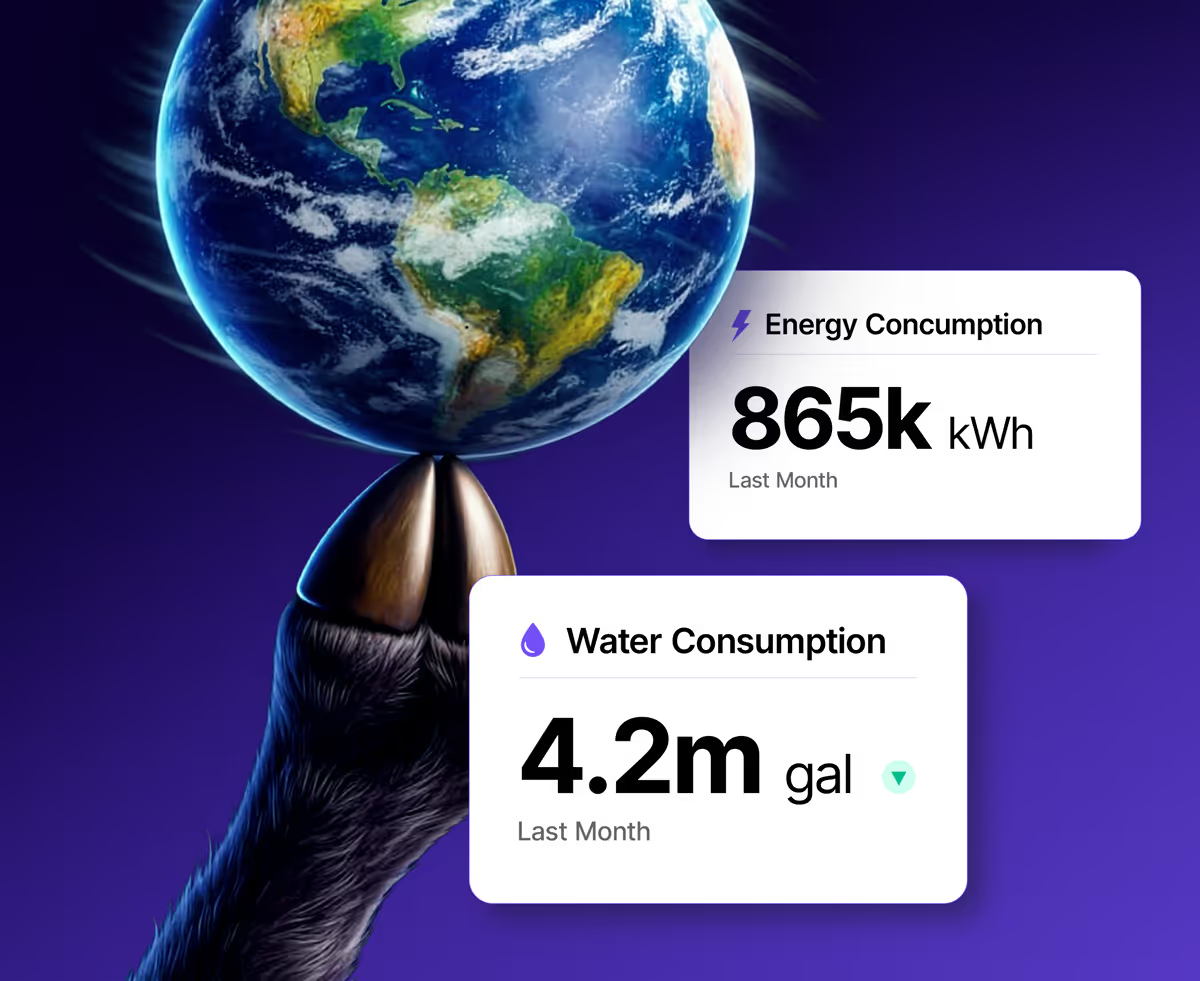
ESG reporting shouldn't be a quarterly fire drill
Pulling spreadsheets from different vendors, normalizing units across kWh, therms, and CCF, and submitting the result to ENERGY STAR Portfolio Manager, GRESB, or whatever framework the investor requires. The numbers usually already exist in the billing data. Nobody owns pulling them together consistently every quarter.
How ESG Reporting works
Billee aggregates consumption data (kWh, kBtu, therms, CCF) as part of running your monthly billing cycle.
That data gets benchmarked against ENERGY STAR standards and normalized across properties and utility types.
Reports are formatted for the frameworks investors and lenders actually require: ENERGY STAR Portfolio Manager, GRESB-ready output, or a standard questionnaire.
Because there's no separate data pull, ESG reporting becomes an export instead of a new project.
This works because ESG reporting and utility billing draw on the same underlying data. Billee doesn't stand up a second system to produce it.
Everything ESG Reporting covers
Consumption tracking.
Electricity, gas, and water, normalized to standard units.
ENERGY STAR benchmarking.
Built into the same data pipeline as billing.
GRESB-ready output.
Formatted for the frameworks investors ask for.
No added burden.
Standardized, defensible insights with zero extra reporting work.
Carbon accounting support.
Integration evaluated case by case.
ESG Reporting at a glance
Quarterly ESG reporting that used to take days of manual assembly becomes a single export, reconciled against the same billing data Billee already uses for recovery and executive reporting.
Works With the Systems You Already Run
Consumption and billing data feeding ESG reports comes from the same pipeline Billee uses for billing: Yardi Voyager and Yardi Breeze, RealPage, and Entrata.




Built for portfolios like yours
Operators with institutional ownership or institutional debt
Portfolios pursuing ENERGY STAR certification
Owners reporting to GRESB, CDP, or similar frameworks
Asset managers who need consumption benchmarked consistently
ESG Reporting, Answered
Straight answers about how ESG Reporting works, from the same account team that runs it for your portfolio.
What does Billee's ESG Reporting include?
Billee's ESG Reporting aggregates consumption data across electricity, gas, and water, benchmarks it against ENERGY STAR standards, and formats the output for frameworks like GRESB and standard investor questionnaires.
Does Billee integrate with ENERGY STAR Portfolio Manager?
Yes. Billee benchmarks consumption data against ENERGY STAR standards and produces output ready for Portfolio Manager submission.
Is this a separate system from Billee's billing platform?
No. ESG Reporting draws on the same consumption and billing data Billee already manages for recovery and executive reporting, so there's no second data pull or separate system to maintain.
Who typically needs ESG reporting in multifamily?
Operators with institutional ownership or debt, and portfolios reporting to frameworks like GRESB or responding to investor sustainability questionnaires, are the most common users.
How often can I generate an ESG report?
ESG data is available on the same cycle as your billing data, so quarterly or more frequent reporting is a matter of exporting current numbers rather than rebuilding a report from scratch.
What utility types does Billee track for ESG purposes?
Billee tracks electricity (kWh), natural gas (therms), and water (CCF), normalizing each to standard units so consumption is comparable across properties and utility types.
Ready to see it on your portfolio?
Billee runs ESG Reporting across the full portfolio. Consumption data is aggregated and benchmarked automatically, and GRESB- and ENERGY STAR-ready reports come out as an export, not a new project.
See what that looks like for your portfolio →Sources: U.S. Environmental Protection Agency, ENERGY STAR Portfolio Manager, accessed 2026; GRESB, GRESB Real Estate Assessment, accessed 2026.
Get in touch
Utilities should be the easiest part of your operation